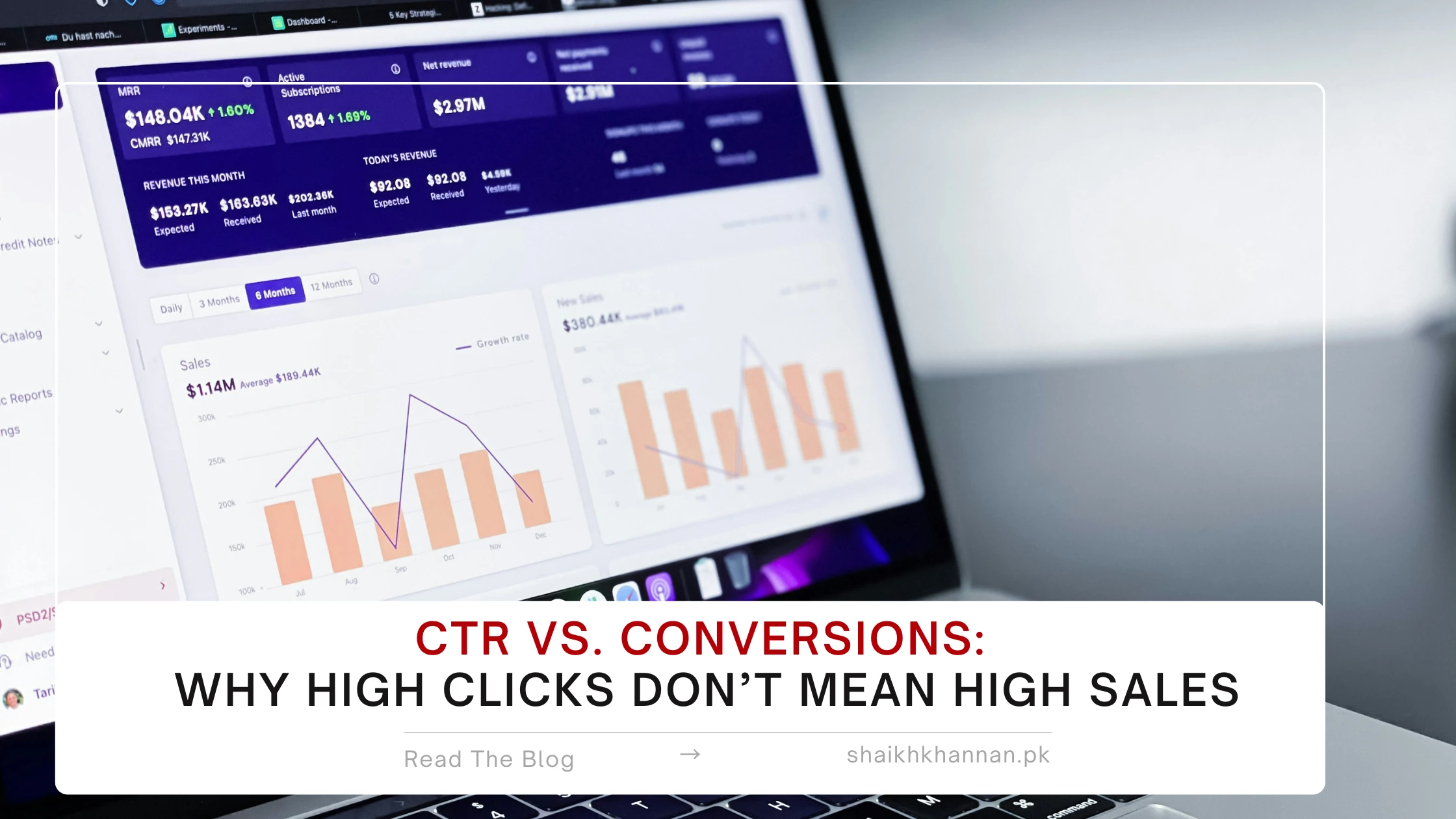
High CTR gives the illusion of performance, but unless that traffic actually converts, it’s just expensive noise. Several campaigns with CTR under 1% have delivered record-breaking ROAS — because the message hit the right people. It was never about attention, it was about alignment.
CTR is a signal. Conversions are the outcome.
Ads aren’t run for attention or applause — they’re run to get paid, and that’s the only goal that actually matters. CTR is a helpful diagnostic metric, but it was never meant to be the north star.
What to prioritize instead
Message-market fit. Does the ad genuinely resonate with the audience’s actual mindset, and is it matched to their stage of awareness?
Conversion intent. Is the ad driving real action or just curiosity — do people land and buy, or land and bounce?
Full-funnel ROAS metrics. Look past CTR to add-to-cart, initiate-checkout, and purchase events, and track blended ROAS rather than isolated clicks.
Feedback loops from real data. Base creative decisions on what the best-converting segments actually show, not what gets the most likes.
A real example
A UGC testimonial campaign for a DTC skincare brand ran at just 0.8% CTR, but CPA came in 40% below average, and the campaign scaled to six figures in under 30 days. The creative focused on a niche concern — “sensitive skin after 30” — rather than mass appeal. That specificity is what made it feel personal, and personal is what converted.
Why CTR alone doesn’t cut it
What actually grows a brand is purchases, profit margins, LTV, and scalable ROAS from cold traffic — not a click-through rate sitting on a dashboard looking impressive.
Further reading
Meta’s guide on optimizing for conversions is a useful companion resource here.
Related reading on this blog: